Creating a Cat-Safe Home: Identifying and Avoiding Toxic Houseplants
For many cat owners, a home is more than just a place to live. It’s a carefully balanced environment, one filled with warmth, comfort, and often, a growing collection of houseplants. We bring plants indoors to soften a space, improve air quality, and create a sense of calm.
For cats, however, that same home is a world of sensory temptation.
Leaves rustle. Stems sway. Soil smells interesting. To a curious cat, every plant is an invitation to sniff, chew, paw, or taste. And because cats are natural nibblers, the overlap between indoor gardening and feline life can quietly become a serious safety risk.
This guide is here to remove the guesswork.
Inside, you’ll learn why cats chew plants, which houseplants are genuinely dangerous, how plant toxins affect a cat’s body, and most importantly how to build a home that stays green without putting your cat at risk. Think of it as a roadmap to a beautiful home that’s also a safe one.
1. Why Cats Chew Plants in the First Place
Before we talk about which plants are dangerous, it helps to understand why cats are drawn to them at all.
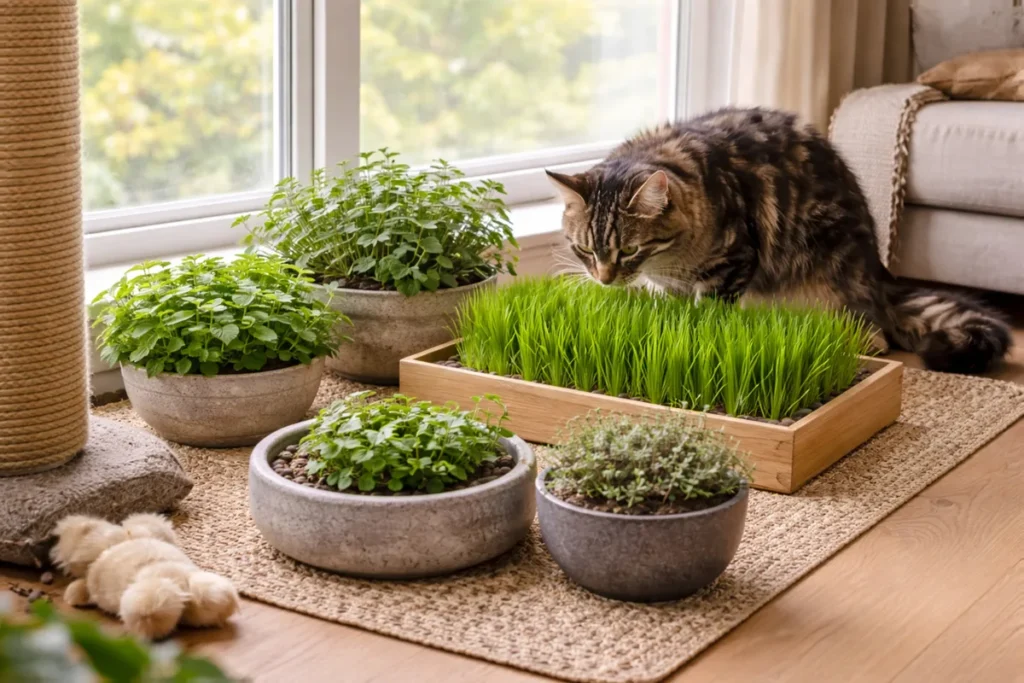
Cats are obligate carnivores, but their instinct to chew greenery is deeply ingrained. This behavior isn’t mischief or defiance, it’s biology.
Common reasons include:
- Digestive support: In the wild, cats chew grass to help move hair and indigestible material through their system or to trigger vomiting when something feels off.
- Nutritional curiosity: Some cats may seek trace nutrients or fiber that aren’t present in their food.
- Boredom and stimulation: Especially in kittens, chewing is part of exploration. Trailing vines and thin leaves move like prey and invite interaction.
You can’t train this instinct away. The solution isn’t discipline, it’s environmental control.
2. High-Risk Plants That Should Never Be in a Cat Home
Some plants are not just “toxic”, they are genuinely life-threatening. If you live with cats, these plants are best avoided entirely.
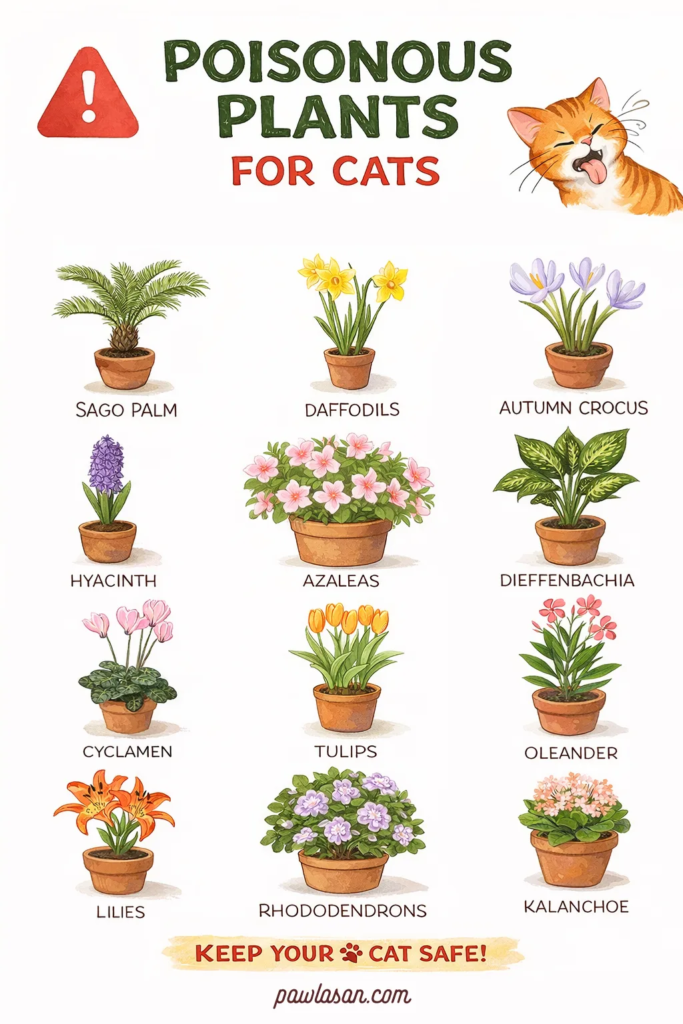
Lilies (True Lilies and Daylilies)
Lilies are among the most dangerous plants a cat can encounter.
Even tiny exposures are enough to cause severe poisoning.
- Why they’re dangerous: The exact toxin is unknown, but it causes rapid kidney failure.
- How exposure happens: Cats don’t need to eat the plant. Licking pollen from their fur or drinking vase water can be fatal.
- Early warning signs: Vomiting, lethargy, loss of appetite, followed by reduced or absent urination within 1–3 days.
If lilies are in your home and you have a cat, the safest option is removal.
Sago Palm
Often used as decorative plants or bonsai, Sago Palms are extremely toxic.
- Primary toxin: Cycasin, which causes severe liver damage.
- Most dangerous part: The seeds, though all parts are toxic.
- Why it’s serious: Even small amounts can be fatal, with a high mortality rate despite treatment.
Plants That Affect the Heart
Plants such as oleander, foxglove, and lily of the valley interfere directly with heart function.
- What they do: Disrupt the electrical signals that regulate heartbeat.
- Possible symptoms: Tremors, collapse, dangerously slow heart rate, and sudden cardiac failure.
These plants pose an immediate medical emergency if ingested.
3. Common Houseplants That Cause Pain and Illness
Not all toxic plants are deadly, but many cause intense discomfort and can lead to secondary complications if untreated.
Plants with Calcium Oxalate Crystals
Popular houseplants like pothos, monstera, philodendron, and peace lilies fall into this category.
- How they harm: Tiny needle-shaped crystals embed in the mouth and throat when chewed.
- Typical reaction: Immediate pain, drooling, pawing at the mouth, and vocal distress.
While rarely fatal, these plants cause significant suffering and should be kept out of reach or avoided.
Saponin-Containing Plants
Snake plants, dracaena, and yucca contain saponins, natural compounds that irritate the digestive system.
- Common symptoms: Vomiting, drooling, lethargy
- Notable sign in dracaena: Dilated pupils
Allium Plants (Onion Family)
Onions, garlic, chives, and related plants are particularly dangerous.
- Why they’re toxic: They damage red blood cells, leading to anemia.
- Important note: Toxicity is cumulative. Small, repeated exposures are just as dangerous as a single large one.
4. Seasonal and Decorative Plant Risks
Many poisonings happen because of temporary decorations—plants we don’t normally keep around.
- Autumn crocus: Extremely toxic, causes multi-organ failure.
- Mistletoe and holly: Can lead to heart and nervous system issues.
- Poinsettias: Often feared, but only mildly toxic, mainly causing mouth irritation.
- Chrysanthemums: Can cause tremors, coordination issues, and vomiting.
Holiday seasons are a good time to double-check what enters your home.
5. Understanding How Plant Toxins Affect Cats
Plant toxins work in different ways depending on their chemical structure. Knowing the category helps explain the symptoms you might see.
Some toxins cause localized pain, while others affect organs like the liver, kidneys, or heart. This is why reactions can range from drooling to sudden collapse.
The same bite that barely affects a dog can be life-threatening for a cat due to their unique metabolism.
6. Cat-Safe Plants You Can Enjoy Without Worry
Living with cats doesn’t mean giving up plants altogether.
Many beautiful houseplants are considered safe when used responsibly:
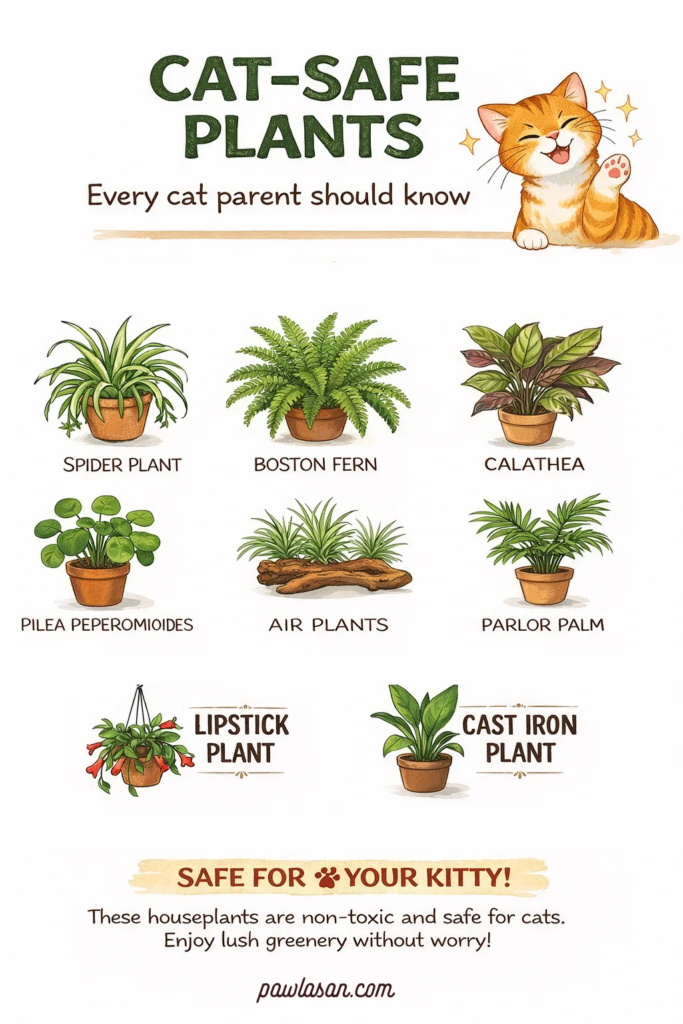
🌿 Spider Plant (Chlorophytum comosum)
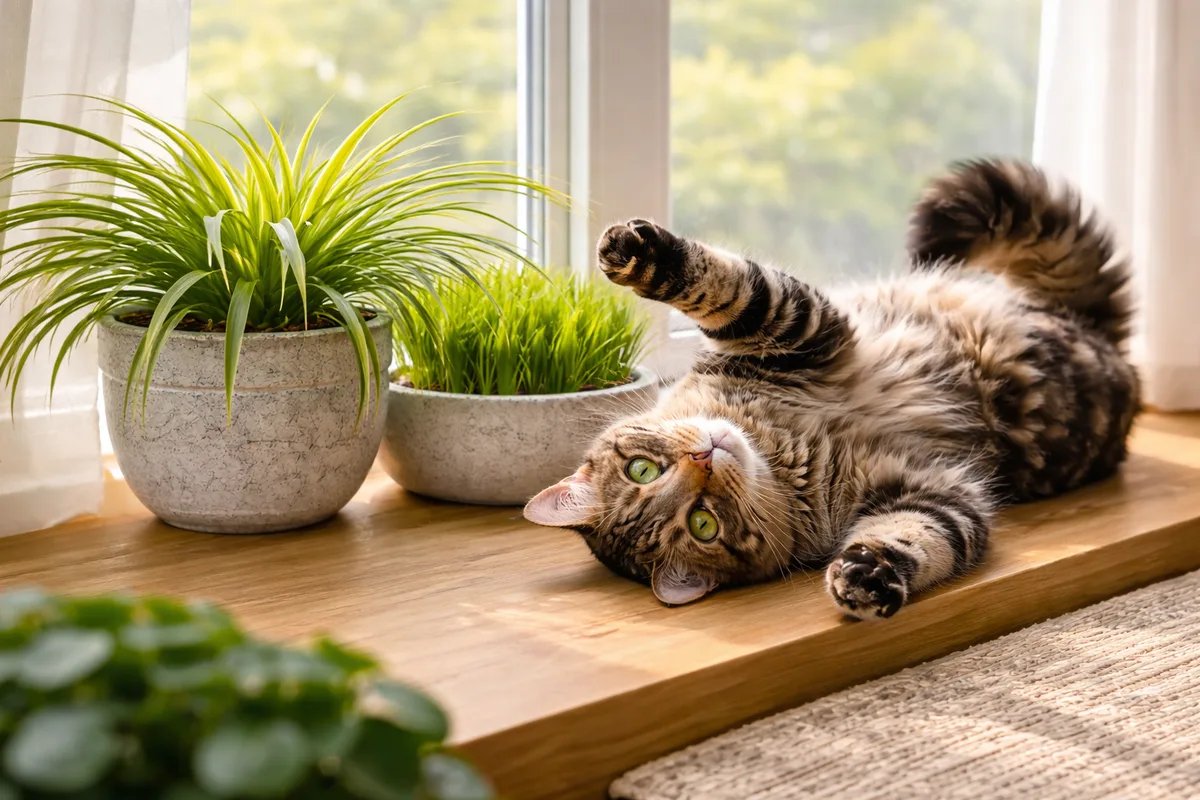
Spider plants are one of the easiest and safest choices for cat homes. They’re hardy, forgiving, and produce long arching leaves with little baby plantlets that dangle playfully.
Cats often enjoy batting at the baby shoots or gently nibbling the leaves. While eating a large amount could cause mild stomach upset (as with most plants), spider plants are not toxic.
They’re ideal for bright windowsills or sturdy floor pots.
🌿 Boston Fern (Nephrolepis exaltata)
True ferns like the Boston fern (also called sword fern) are safe for cats and thrive in humid environments like bathrooms or kitchens.
Their soft, feathery fronds add texture without risk.
Important distinction: Boston fern is safe but Asparagus fern is not. Always check the botanical name when buying.
🌿 Calathea & Prayer Plants (Goeppertia and Maranta species)
Known for their beautiful patterned leaves, calatheas and prayer plants are both striking and safe for cats.
Many varieties gently fold their leaves upward at night, which adds subtle movement and interest to your home.
They prefer indirect light and consistent watering, making them great for calm, cozy interiors.
🌴 Areca Palm (Dypsis lutescens)
Also known as the Butterfly Palm, the Areca palm offers a tropical feel without the dangers associated with certain other palm species.
It’s considered non-toxic to cats and can grow quite full and airy in bright indoor light.
Just be careful not to confuse it with the Sago Palm, which is extremely toxic.
🌵 Echeveria (Echeveria species)
If you love succulents but want to avoid the risks of aloe vera (which is toxic to cats), Echeveria is a safer alternative.
These rosette-shaped succulents are compact, sculptural, and perfect for sunny windowsills.
They’re low maintenance and considered non-toxic if nibbled.
🌸 African Violet (Streptocarpus sect. Saintpaulia)
For those who want color without worry, African violets are a lovely choice.
They bloom repeatedly indoors and are considered safe for cats. Their soft leaves and compact growth make them ideal for small spaces.
🌳 Money Tree (Pachira aquatica)
The money tree, often sold with a braided trunk, is a popular statement plant that’s also considered non-toxic to cats.
It tolerates bright indirect light and occasional watering lapses, making it beginner-friendly.
🌿 Peperomia (Peperomia species)
Peperomias, sometimes called radiator plants, come in many textures and shapes from thick glossy leaves to rippled varieties.
They’re compact, easy to care for, and considered safe for cats.
A great choice for desks, shelves, or low tables.
🌺 Moth Orchid (Phalaenopsis species)
If you love orchids, moth orchids are widely available and considered non-toxic to cats.
They add elegance and long-lasting blooms without introducing risk.
🌿 Staghorn Fern (Platycerium species)
Staghorn ferns have dramatic, sculptural leaves that resemble antlers. They are considered non-toxic and can be grown in pots or mounted.
If mounted, make sure they’re secure and stable to avoid accidents.
🌴 Bamboo Palm (Chamaedorea seifrizii)
The bamboo palm is another cat-safe palm option that thrives in moderate indoor light.
Its graceful, feathery fronds soften a room while remaining non-toxic.
🌵 Haworthia (Haworthiopsis species)
Often confused with aloe, Haworthia is a small striped succulent that is considered non-toxic to cats.
It’s compact, resilient, and a safer option for sunny spots.
“Non-toxic” doesn’t mean “edible.”
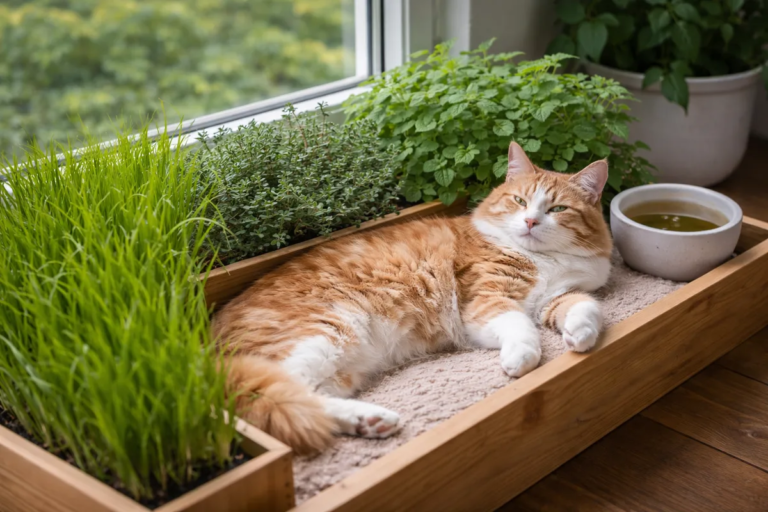
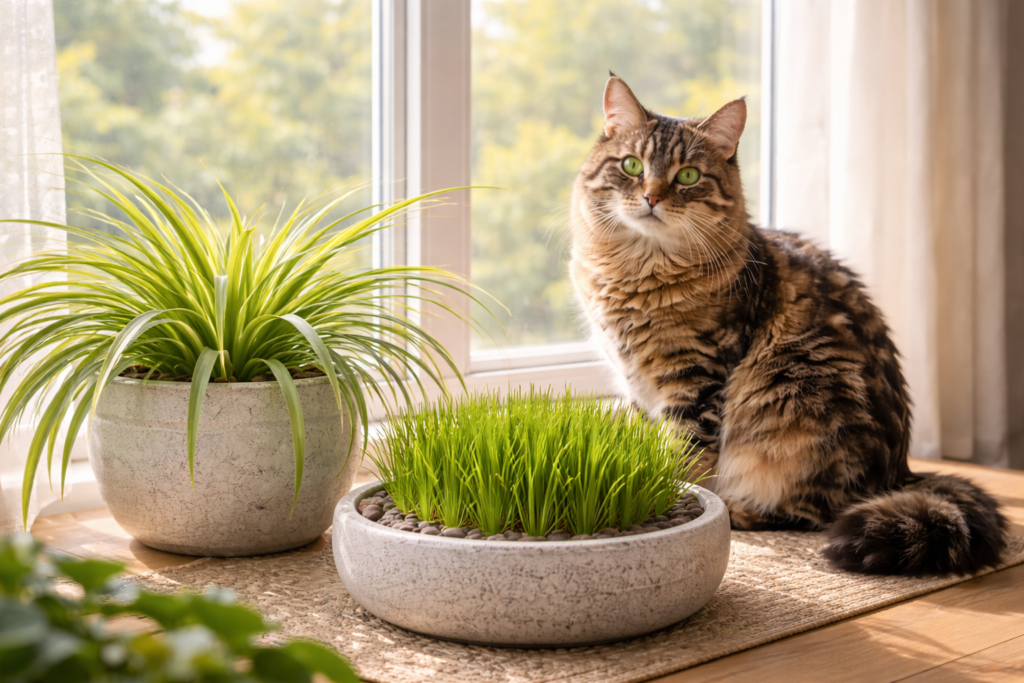
Even safe plants can cause mild digestive upset if a cat eats a large amount. That’s normal for most greenery and not the same as chemical poisoning. If your cat tends to chew heavily, offering a dedicated pot of cat grass can redirect that behavior safely.
Always double-check exact species names, as common names can be misleading.
7. What to Do If Your Cat Eats a Plant
If you suspect ingestion, act quickly and calmly.
- Document: Take a photo of the plant and note how much may be missing.
- Call for guidance: Reach out to a pet poison hotline or your veterinarian.
- Seek care: Go to an emergency clinic if advised. Do not induce vomiting unless instructed.
Fast action can make a life-saving difference.
8. Preventing Problems Before They Start
Smart prevention is far easier than emergency treatment.
Helpful strategies include:
- Using hanging planters or shelves
- Offering cat-safe grass as an alternative
- Labeling plants with their scientific names
- Avoiding vague “tropical foliage” purchases
A little planning goes a long way.
A Home That’s Green and Safe
Cats and plants can absolutely coexist but only with informed choices.
Plants evolved chemical defenses to survive in the wild. Cats, living safely indoors, don’t have the instinct to avoid them. That responsibility falls to us.
By choosing non-toxic plants, understanding risks, and preparing for emergencies, you can create a home that’s both lush and safe, one where your cat can explore without danger and you can enjoy your space with peace of mind.