How to Build a Calm, Sensory Oasis for Your Cat
A Practical Guide to Creating a Small-Space Indoor Cat Garden
For most indoor cats, the world is made of familiar things.
The same couch.
The same hallway.
The same window.
The same sun patch slowly moving across the floor each afternoon.
There is comfort in familiarity. But there can also be monotony.
Keeping cats indoors is, for most homes, the safest choice. It protects them from traffic, predators, parasites, infectious diseases, and countless environmental dangers. Indoor cats statistically live longer lives. That part is clear.
But safety is only one piece of well-being.
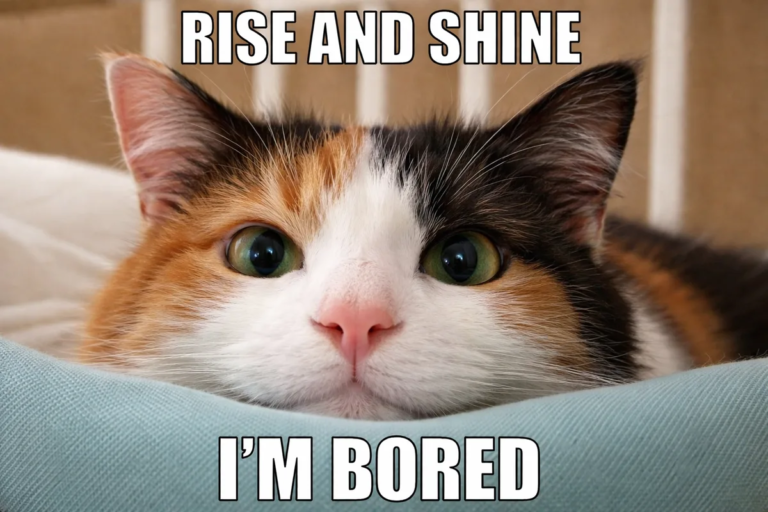
A cat can be safe and still be bored. Safe and under-stimulated. Safe and living in a world that rarely changes.
In nature, even a resting cat is surrounded by movement. Grass bends. Air shifts. Insects hum. Scents drift and fade. Light changes by the minute. Indoors, most of that sensory variety disappears unless we intentionally recreate it.
That is where an indoor cat garden comes in.
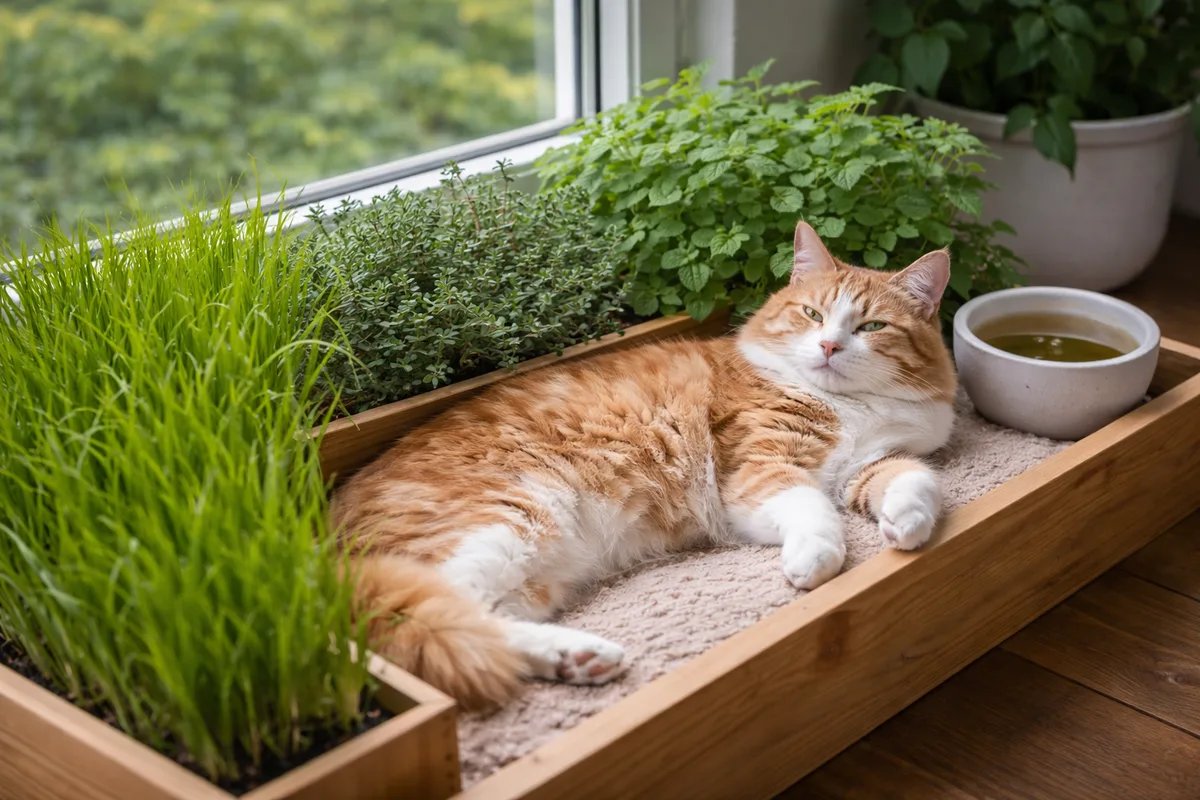
And before you imagine elaborate hanging installations or Instagram-perfect vertical plant walls – pause. A real cat garden does not need to be complicated, expensive, or architecturally impressive. In fact, the best ones are low, stable, horizontal, and quietly integrated into your existing space.
This guide will walk you through how to build a calm, sensory oasis for your cat using simple surfaces like floors, windowsills, and low tables with safe plants, realistic layouts, and practical maintenance strategies that work in small apartments and busy homes.
Why Indoor Cats Need More Than Toys
When people think about enrichment, they usually think about toys.
And toys absolutely matter. Wand toys, balls, tunnels, puzzle feeders, these are important for active engagement. But toys are episodic. They require participation. Once playtime ends, the environment goes back to being static.
Veterinary behaviorists define enrichment more broadly. They describe it as providing opportunities for animals to express natural behaviors, even passively.
For cats, natural behaviors include:
- sniffing and scent investigation
- gentle chewing
- rubbing and marking
- resting near subtle movement
- observing from a place of safety
- exploring textures
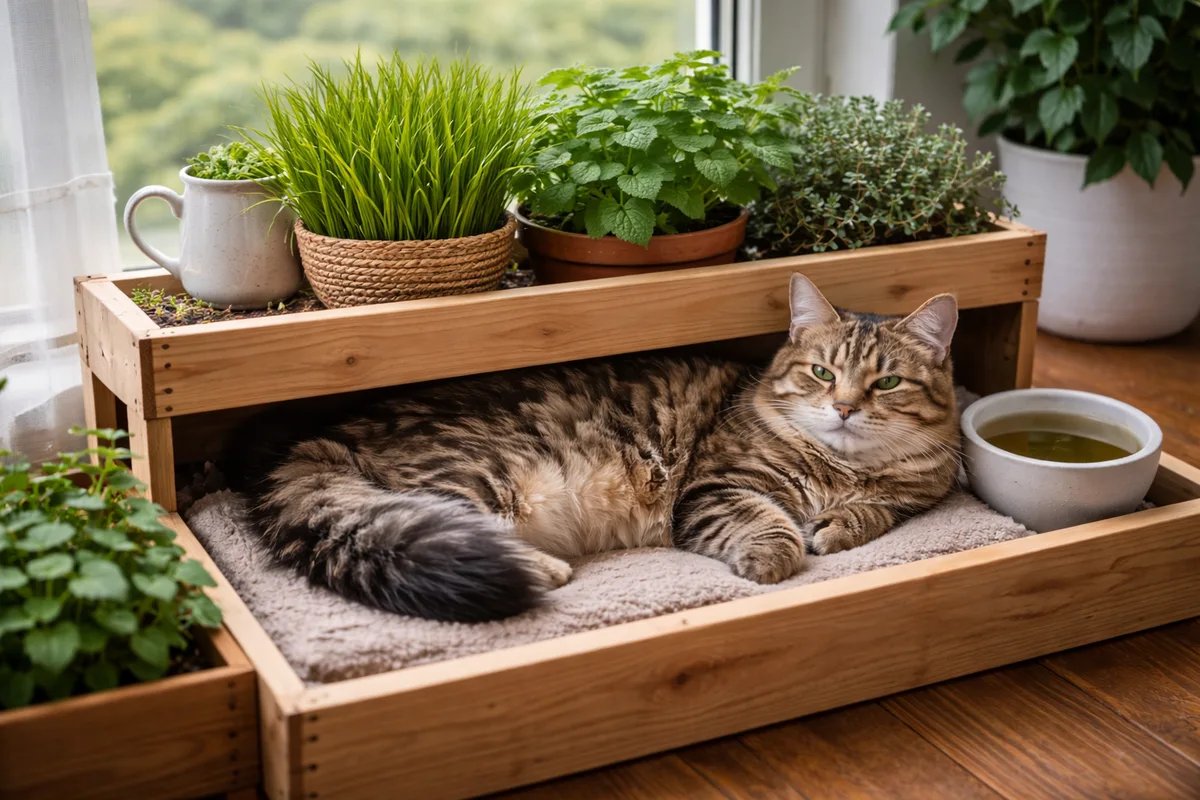
An indoor garden supports many of these behaviors without demanding your constant involvement.
It becomes background enrichment — something that exists whether you are actively interacting or not.
The Power of Passive Enrichment
A living plant is not static.
Throughout the day:
- moisture levels subtly shift scent
- air currents move leaves
- sunlight changes warmth and color
- shadows stretch and shrink
Even if your cat appears asleep, their sensory system continues processing environmental information.
Cats have a highly developed sense of smell and acute sensitivity to movement. While exact comparisons vary, feline olfactory ability is significantly stronger than ours. A plant that seems neutral to you may be rich with scent and subtle variation to them.
This kind of low-level stimulation can reduce boredom and help indoor cats feel more engaged with their space, especially those who spend long stretches alone during the day.
About That Grass-Eating Habit
If you have ever caught your cat chewing on a plant, you probably had one of two reactions:
- Panic: what if it’s toxic?
- Curiosity: do they need this for nutrition?
The truth is simpler.
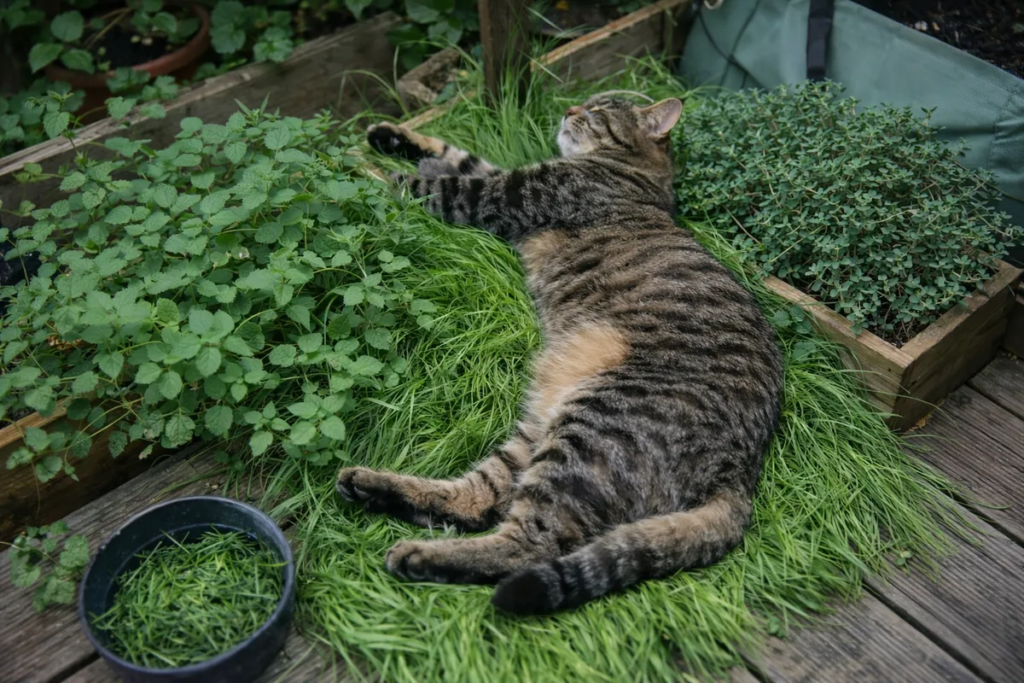
Cats are obligate carnivores. They do not require plants in their diet. Grass is not a necessary supplement. There is no strong scientific evidence that it prevents hairballs or “cleans” the digestive system.
However, plant-chewing behavior is common and considered normal.
Current understanding suggests a few possibilities:
- Grass may help stimulate vomiting when a cat feels gastric irritation.
- It may help move indigestible material, such as fur, through the digestive tract.
- It may simply provide sensory stimulation.
The key is not eliminating the behavior. The key is controlling it.
By offering safe plants intentionally grown for cats, you reduce the likelihood that they will turn to decorative and potentially toxic houseplants elsewhere in the home.
Why Horizontal Gardens Work Better in Real Homes
A lot of online advice promotes vertical cat gardens: stacked shelves, hanging pots, mounted greenery.
They look beautiful in photographs.
In reality, they introduce problems:
- unstable pots
- falling soil
- jumping miscalculations
- constant supervision
- cleaning headaches
Most cats do not need elevated greenery. They need easy access.
Horizontal gardens are:
- safer
- more stable
- easier to maintain
- more natural for how cats move
A simple rule:
If your cat can walk up to it, sniff it, interact with it, and leave without jumping or balancing, you’re designing correctly.
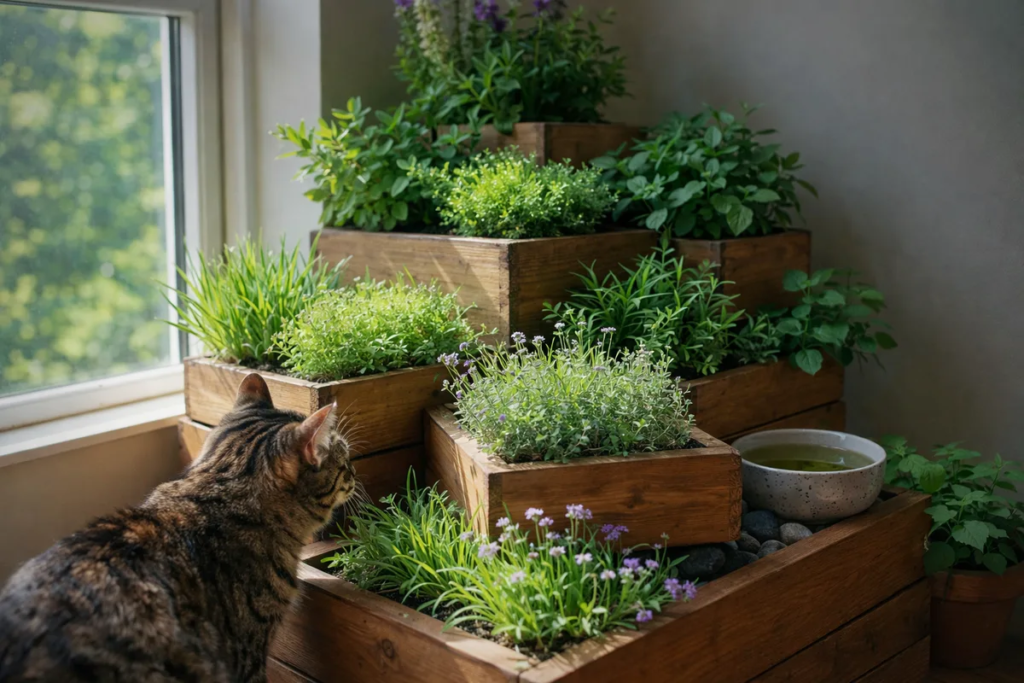
The Best Plants for a Calm, Horizontal Cat Garden
In small spaces, plant choice matters. Every pot should be:
- non-toxic
- sturdy
- manageable
- genuinely interesting to cats
The following plants are widely recognized as non-toxic to cats by veterinary toxicology resources such as ASPCA Animal Poison Control.
1. Cereal Grasses (“Cat Grass”)
This is the foundation of most indoor cat gardens.
Cat grass typically includes young wheat, oat, barley, or rye shoots.
What it offers:
- soft blades for chewing
- mild scent
- rapid growth
- easy replacement
What it does not offer:
- it is not a medicine
- it does not reliably prevent hairballs
But it gives cats a safe outlet for chewing, and that alone makes it valuable.
How to grow it horizontally:
Use shallow, wide containers rather than deep pots. Baking trays, wooden boxes, or low ceramic dishes work beautifully.
Cats often prefer to stand inside grass while chewing, rather than leaning awkwardly over a pot.
2. Catnip (Nepeta cataria)
Catnip is famous and frequently misunderstood.
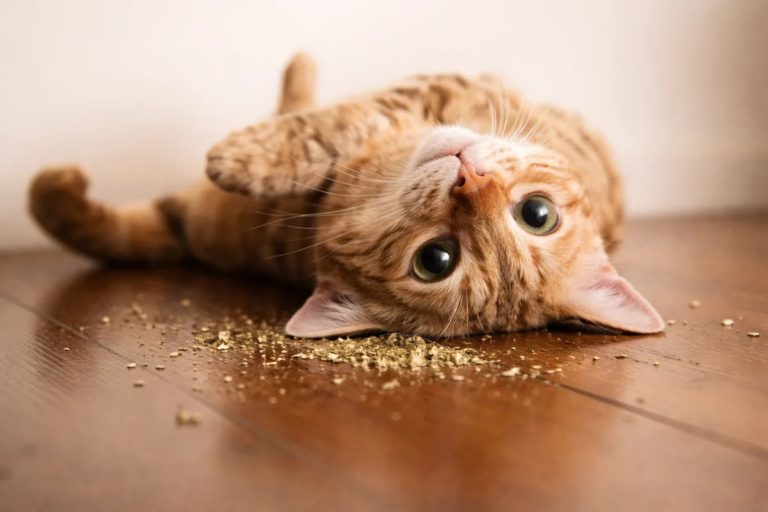
Roughly 60–70% of cats respond to catnip. The sensitivity is genetic and often does not appear until several months of age.
Catnip contains nepetalactone, which stimulates sensory receptors and may trigger behaviors like:
- rolling
- rubbing
- playful bursts
- temporary relaxation
The effect is short-lived and harmless. Cats do not become addicted.
Horizontal tip:
Keep catnip trimmed and compact. A wide, stable ceramic bowl on a table or windowsill works well.
3. Silver Vine (Actinidia polygama)
Silver vine is less common but often more potent than catnip.
Research suggests a higher percentage of cats respond to silver vine compared to catnip, including some who show no reaction to catnip at all.
Its behavioral effects are similar playful engagement followed by calm.
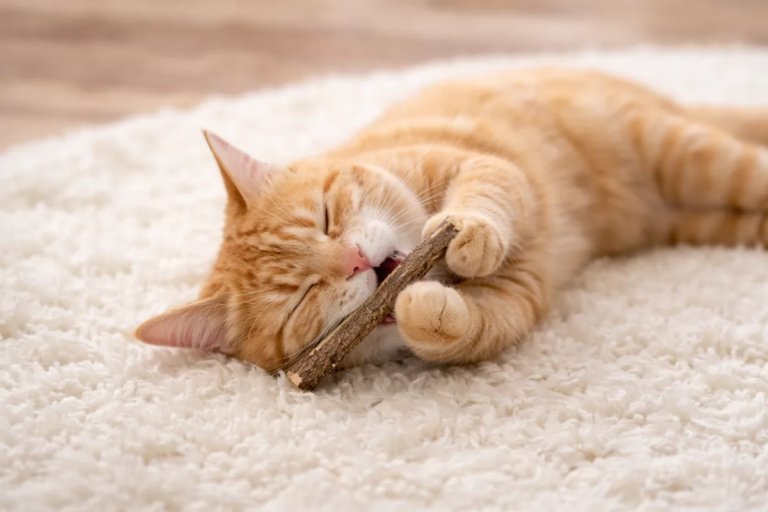
It does not need to climb in your home. Keep it trimmed and low, or use silver vine sticks placed near other plants for scent enrichment without growing a vine.
4. Cat Thyme (Teucrium marum)
Despite its name, cat thyme is not culinary thyme.
It has a strong scent and grows slowly, making it ideal for small setups.
Some cats respond with relaxed behavior. Others ignore it entirely.
Its compact size makes it suitable for low bowls or small pots without constant trimming.
5. Valerian (Valeriana officinalis)
Valerian has a scent many humans dislike but some cats find stimulating.
Its effect is similar to catnip.
Not all cats enjoy it. Introduce gradually and observe behavior.
Because of its stronger smell, it works best in a single dedicated pot rather than mixed into a multi-plant bowl.
Designing a Horizontal Cat Garden That Actually Works
Now let’s make it practical.
Instead of building upward, think spread out.
The Floor Grass Station
This works beautifully in apartments.
What you need:
- a wide tray
- multiple small grass pots
- a non-slip mat underneath
Place it:
- near a sunny window
- beside a scratching post
- in a corner your cat already visits
The goal is to integrate the garden into existing routines.
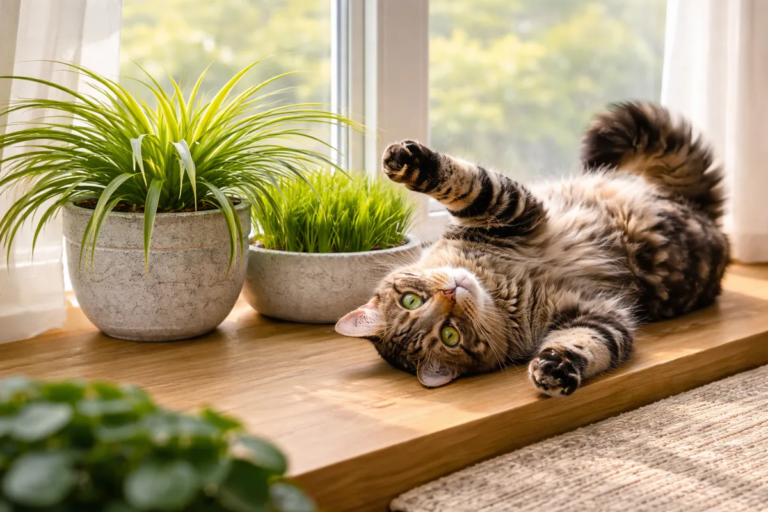
The Windowsill Strip
Windowsills are prime real estate.
Line up:
- 2–4 heavy ceramic pots
- alternating grass and catnip
Ensure pots are:
- wide-based
- stable
- soil-covered
This setup combines sunbathing and grazing.
The Low Table Garden
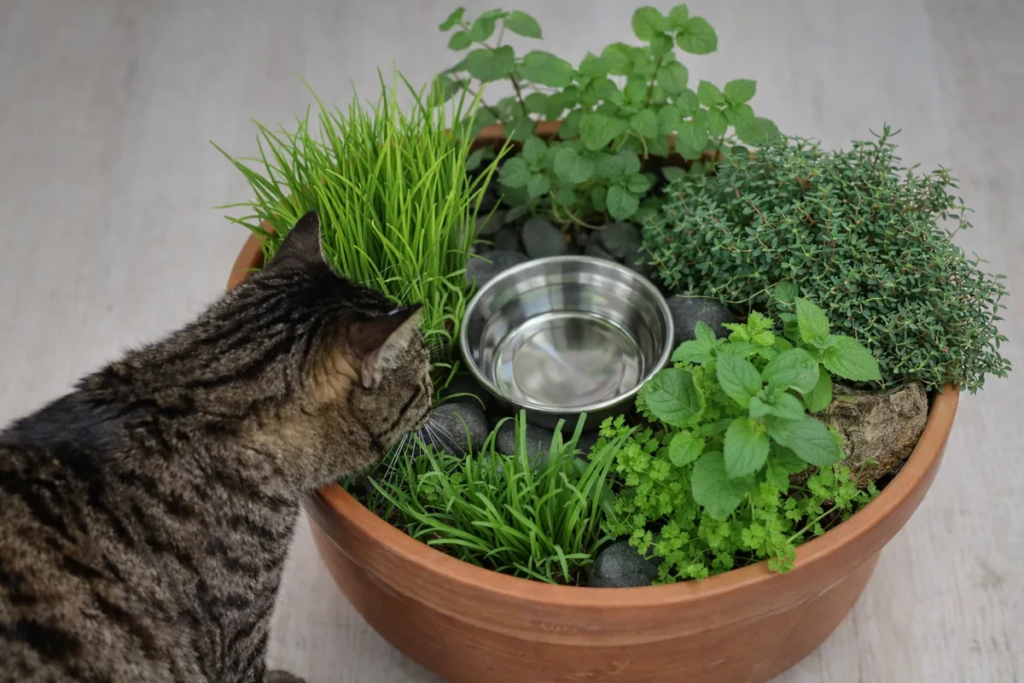
If your cat is allowed on furniture, a shallow bowl garden works beautifully.
Use:
- a wide ceramic bowl
- mixed grasses
- a small cat thyme cluster
It functions as enrichment while still looking decorative.
Soil Safety: The Overlooked Detail
Many people focus on the plant and ignore the soil.
Commercial potting soil may contain:
- slow-release fertilizer pellets
- chemical additives
- perlite
Perlite is generally non-toxic but can irritate if ingested.
Better choices include:
- organic potting soil without fertilizer pellets
- coconut coir
- seed-starting mixes
Avoid soils with visible fertilizer beads.
Preventing Digging
Loose soil invites digging.
Cover soil with:
- large, smooth river stones
- heavy decorative pebbles
They must be:
- too large to swallow
- heavy enough not to move
This prevents mess and reduces the “litter box confusion” effect.
Managing Water, Mold, and Gnats
Indoor gardens need airflow.
Mold usually indicates overwatering. Reduce watering and increase ventilation.
Fungus gnats are common in moist soil. Use yellow sticky traps out of reach and add a thin sand layer to reduce breeding.
Dry grass tips often indicate low humidity. Light misting can help.
The Two-Pot Rotation Strategy
Cats are efficient at flattening grass.
Grow grass in pairs:
- one accessible
- one recovering in bright light
Rotate every few days.
This keeps the garden lush and sustainable.
What to Avoid, Even If It Looks Pretty
Not every houseplant belongs in a cat-friendly home.
Some of the most popular decorative plants can be dangerous to cats, even in small amounts. Before adding anything new to your space, it’s important to know which varieties pose real risks.
Plants to strictly avoid include:
- Lilies (all species) even small exposures can be extremely dangerous
- Sago palm highly toxic, especially the seeds
- Ivy (Hedera species)
- Azaleas
- Snake plants (Dracaena trifasciata)
- Chives or garlic (Allium species)
These plants may look harmless, but ingestion can cause anything from digestive upset to serious medical emergencies.
If you’re unsure about a plant, always check its full botanical name before bringing it home. Common names can be misleading, and some safe plants have toxic look-alikes.
For a deeper breakdown of which houseplants are toxic and how to identify them, you can check out my full guide on toxic plants for cats. It walks through the most common risks and how to create a safer indoor environment.
When in doubt, research first. A few extra minutes of checking can prevent a stressful emergency later.
A Small Garden, A Bigger Life
An indoor cat garden doesn’t have to be impressive.
It doesn’t need to look like something out of a design magazine. It doesn’t need fancy shelves or dramatic arrangements. Your guests don’t need to notice it at all.
What matters is how it feels to your cat.
It should feel safe.
Easy to reach.
Steady under their paws.
Part of the home, not an obstacle inside it.
A few pots of grass by a sunny window. A low bowl of catnip near their favorite resting spot. A quiet corner where they can sniff, chew, and watch the light change.
That’s enough.
When you shift your thinking from “decorating” to “creating habitat,” something changes. You stop asking how it looks and start asking how it functions, how it smells, how it moves, how it fits into your cat’s daily rhythm.
For an indoor cat, small changes can make a big difference. A patch of grass to stand in. Leaves that move when the air shifts. A scent that wasn’t there yesterday.
To us, it may seem simple.
To them, it makes the world feel alive.
And sometimes, that quiet little garden corner is the difference between a room that just exists and a space that truly feels like home.