
20 Things to Know Before You Bring a Kitten Home
Bringing a new kitten home is one of those moments you never really forget.
There’s the excitement, of course. The tiny paws. The impossibly loud purr coming from such a small body. The way they look at you like the world is brand new… because to them, it is.
But there’s also something else many people don’t talk about enough: uncertainty.
Am I doing this right?
Why is my kitten hiding?
Why is she biting my hands?
Why does everyone else seem to have a calm kitten and mine is climbing the curtains at midnight?
Here’s the truth that experienced cat people know but rarely say out loud: the first weeks with a kitten are messy, emotional, and deeply formative. For your kitten, this is one of the most stressful transitions of their life. For you, it’s the beginning of a relationship that may last 15 to 20 years.
This guide is here to help you through that transition with confidence, patience, and kindness for both of you.
Rather than overwhelming you with rules, think of these 20 tips as pillars. You don’t need to be perfect. You just need to be consistent, observant, and willing to learn alongside your kitten.
Let’s begin where everything should start: with safety.
1. Create a Safe Starter Zone Before Anything Else
One of the most common mistakes new kitten parents make is giving their kitten full access to the home on day one.
To us, our homes feel familiar and manageable. To a kitten, even a small apartment can feel like a giant, unpredictable maze filled with strange smells, echoing sounds, and nowhere to hide.
A safe starter zone solves this.
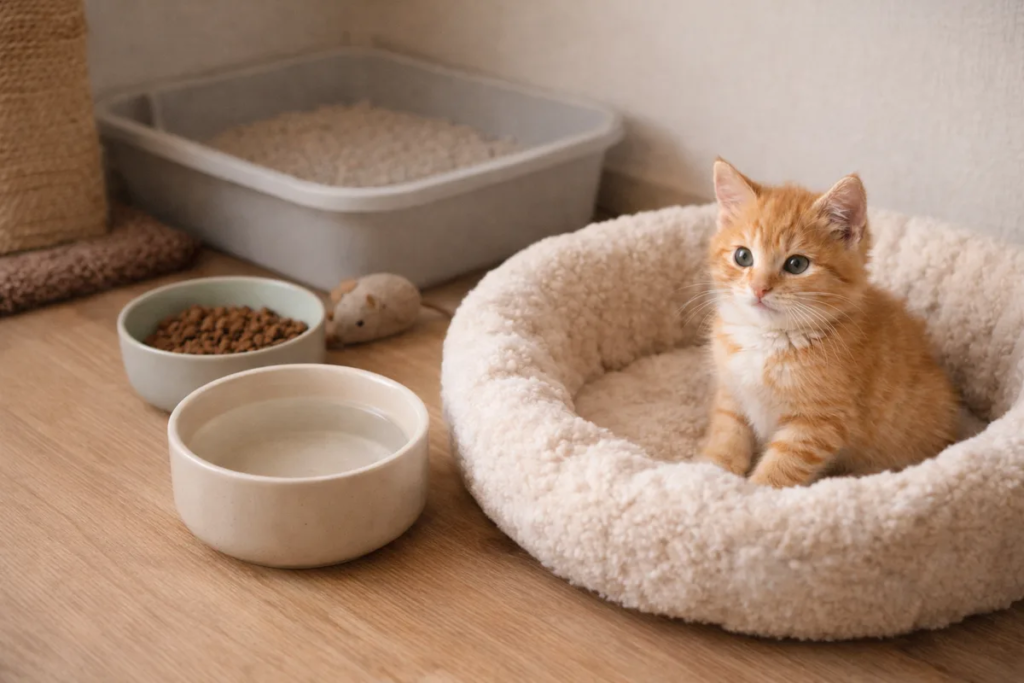
Choose a quiet, low-traffic room, a bathroom, spare bedroom, or office works well. This space should include:
- A litter box placed far from food and water
- Fresh water and food bowls
- A cozy bed or cardboard box with a blanket
- A small vertical space, like a stool or mini cat tree
This small world allows your kitten to quickly feel ownership over their environment. Confidence grows from familiarity. Once they feel safe here, exploring the rest of the home becomes exciting rather than frightening.
Think of this room as your kitten’s first “home within a home.”
2. Let Hiding Happen (It’s Not Rejection)
If your kitten disappears under the bed or behind the toilet and stays there for hours or even days, take a breath.
This is normal.
Hiding is not a sign that your kitten dislikes you. It’s a survival instinct. In nature, small cats stay hidden until they’ve assessed whether an environment is safe.
The worst thing you can do is pull them out.
Instead:
- Sit quietly in the room
- Speak softly
- Read, work, or scroll your phone nearby
- Let your presence become predictable and non-threatening
Eventually, curiosity will win. Trust builds when your kitten is allowed to move at their own pace.
3. Kitten-Proof From Their Point of View
Kittens explore with their mouths, paws, and an alarming amount of confidence.
Before letting your kitten roam, get down on the floor and look around at kitten eye level. You’ll quickly notice hazards you never thought about before.
Pay special attention to:
- Electrical cords and charging cables
- Small objects like hair ties, rubber bands, or pins
- Gaps behind appliances or under cabinets
- Toxic plants (many common houseplants are dangerous to cats)
Kitten-proofing isn’t a one-time task. It’s an ongoing habit and one that saves you stress, vet visits, and sleepless nights.
4. Gather the Right Supplies (Less Is More)
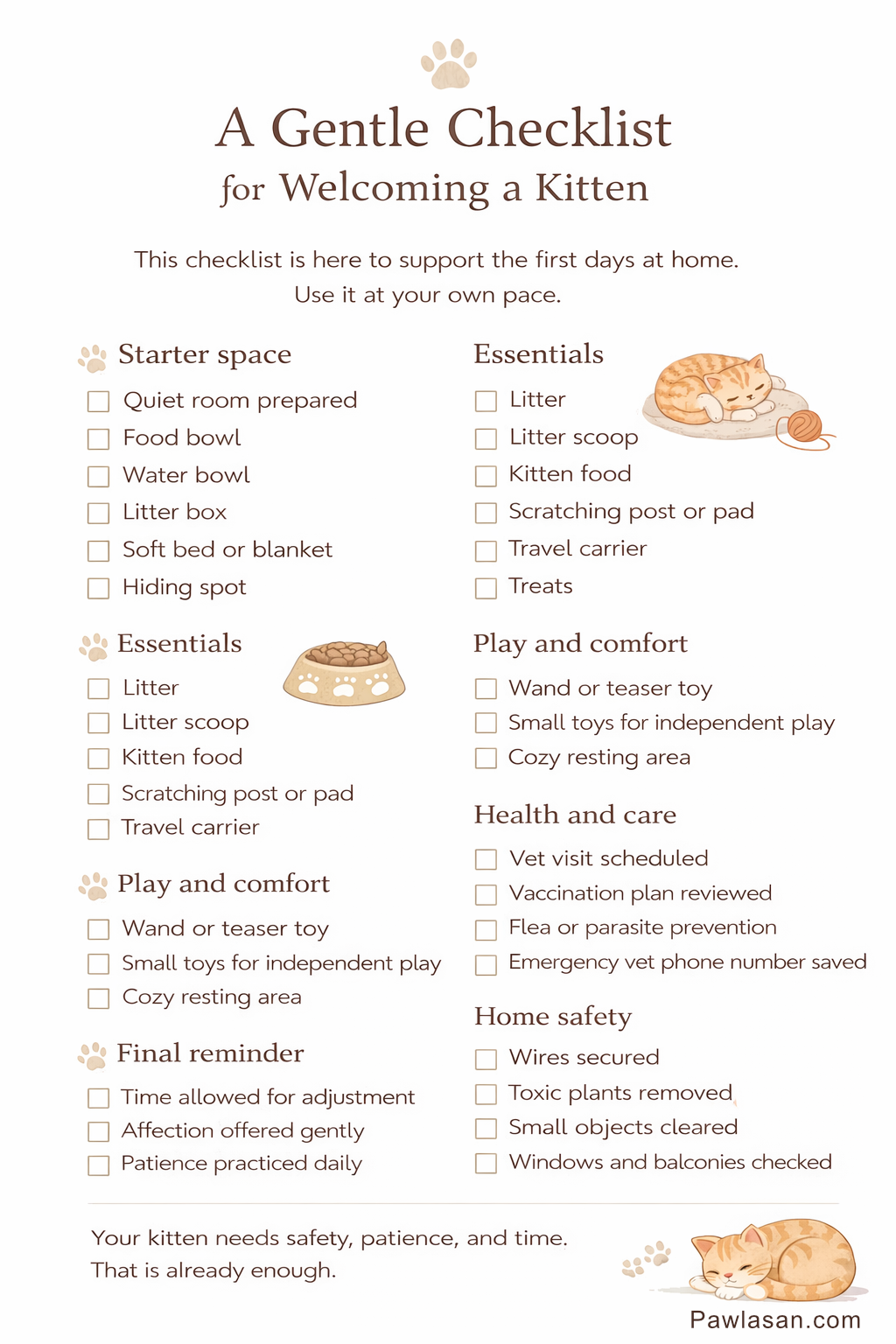
You don’t need a house full of gadgets to raise a happy kitten. You do need a few essentials that support good habits early on.
Focus on:
- At least one litter box (two is even better)
- High-quality kitten food labeled for growth
- Shallow ceramic or stainless steel bowls
- A variety of toys (wand toys, soft balls, kicker toys)
- One or two scratching surfaces
Avoid plastic bowls if possible, as they can harbor bacteria and cause chin acne.
When in doubt, choose simple, clean, and easy to maintain.
5. Schedule the First Vet Visit Early
Your first veterinary visit sets the foundation for your kitten’s long-term health.
This visit typically includes:
- A full physical exam
- Fecal testing for parasites
- Discussion of vaccines and deworming
- Guidance on nutrition and growth
- Answers to your many questions (write them down!)
Even kittens from reputable breeders or shelters can carry parasites. Early detection keeps small problems from becoming serious ones.
6. Keep the Sensory World Calm at First
Kittens hear far more than we do. Loud appliances, sudden noises, or constant stimulation can overwhelm them quickly.
During the first week:
- Keep volume levels low
- Avoid sudden loud sounds
- Introduce household noises gradually
A calm environment helps your kitten regulate stress and learn that your home is a safe place.
7. Expand Their World Slowly
Once your kitten is confidently using the litter box and greeting you in their starter room, it’s time to explore.
Open the door and let them venture out on their own. Don’t carry them into new spaces.
Allow exploration room by room. This helps your kitten:
- Learn the layout of the home
- Remember where their litter box is
- Build confidence without panic
Slow expansion creates a kitten who explores boldly, not fearfully.
8. Respect Consent (Yes, Even With Kittens)
Cats are deeply consent-based animals. Teaching respect early builds trust that lasts for life.
When approaching your kitten:
- Offer a finger at nose level
- Let them choose to engage
- Watch for signs of overstimulation (tail flicks, ears turning sideways)
A kitten who feels respected becomes a cat who seeks affection willingly and often more often.
9. Understand the Zoomies (They’re Normal)
Kittens are most active at dawn and dusk. This natural energy surge often shows up as sudden sprints, jumps, and wild play.
Instead of fighting it, work with it.
Before bedtime:
- Schedule an active play session
- Use wand toys to simulate hunting
- Follow play with a small meal
This satisfies instinctual needs and helps your kitten settle down afterward.
10. Always Use Toys. Never Hands
It’s tempting to wiggle fingers or play rough with a tiny kitten. Resist the urge.
Using hands as toys teaches kittens that skin is fair game. What feels cute now can become painful later.
Instead:
- Redirect biting to toys
- Freeze your hand if bitten
- Reward calm, appropriate play
This single habit prevents many future behavior problems.
‘
11. Create Predictable Daily Routines
Cats find comfort in knowing what comes next.
Try to keep:
- Feeding times consistent
- Play sessions predictable
- Sleep routines steady
Routine reduces anxiety and creates a sense of control in your kitten’s world.
12. Skip Punishment. Choose Redirection
Cats don’t understand punishment. They understand cause and effect.
If your kitten does something “wrong”:
- Calmly interrupt
- Redirect to an appropriate alternative
- Reward the correct behavior
This teaches without fear and preserves trust.
13. Provide Scratching Options Early
Scratching is a biological need, not misbehavior.
Offer:
- Vertical scratchers
- Horizontal scratchers
- Different textures
Place them near sleeping areas and social spaces. This makes scratching furniture far less appealing.
14. Change Food Slowly
A kitten’s digestive system is sensitive. Sudden food changes can cause diarrhea and dehydration.
When transitioning food:
- Mix new food gradually over 7–10 days
- Watch stool consistency
- Slow down if needed
Your patience here protects your kitten’s health.
15. Secure Doors and Windows
Kittens are curious and fast.
Install screens, secure balconies, and develop the habit of checking before opening doors. Many accidents happen in moments of distraction.
Safety habits become second nature quickly and they matter.
16. Socialize Gently and Positively
Early experiences shape lifelong confidence.
Expose your kitten to:
- Different people
- Gentle handling
- New surfaces and sounds
Keep experiences positive and brief. End sessions before stress appears.
17. Desensitize to Household Objects
Vacuum cleaners, carriers, and crates don’t need to be scary.
Let your kitten investigate these objects while they’re inactive. Pair them with treats or play. Familiarity reduces fear later.
18. Learn Your Kitten’s Comfort Style
Some kittens love height. Others prefer enclosed spaces.
Observe where your kitten relaxes and provide environments that match their instincts. This helps them feel understood.
19. Invest in Quiet Time Together
Not every interaction needs to be play or cuddles.
Simply sharing space builds trust. Your calm presence matters more than constant engagement.
20. Let Go of Perfection
You will make mistakes. Everyone does.
What matters most is:
- Consistency
- Safety
- Patience
- Love
Your kitten doesn’t need a perfect home. They need a steady one.
Growing Together
Welcoming a kitten isn’t just about raising a pet. It’s about forming a relationship, one built slowly, gently, and over time.
With a safe environment, predictable care, and emotional patience, your kitten will grow into a confident, affectionate companion who knows they belong.
And one day, when they’re curled up beside you, purring like they did when they were tiny, you’ll realize something important:
You didn’t just bring them home.
You became their home. 🐾
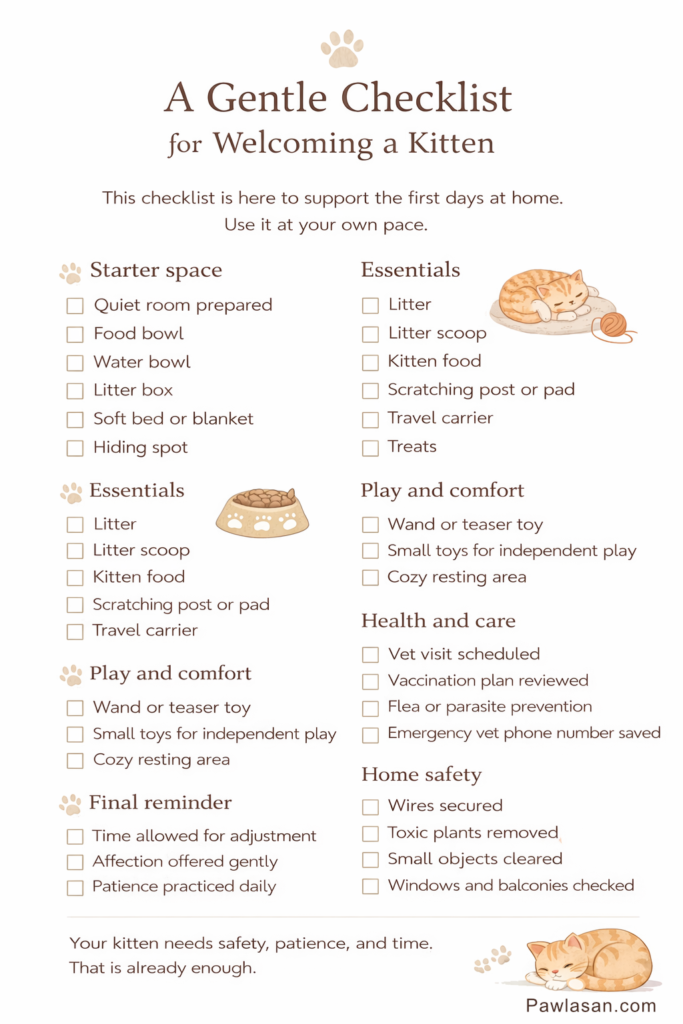
Bringing a kitten home is not about control or perfection. It is about making space for another life to unfold gently alongside yours. A calm home, steady care, and time will do most of the work for you.